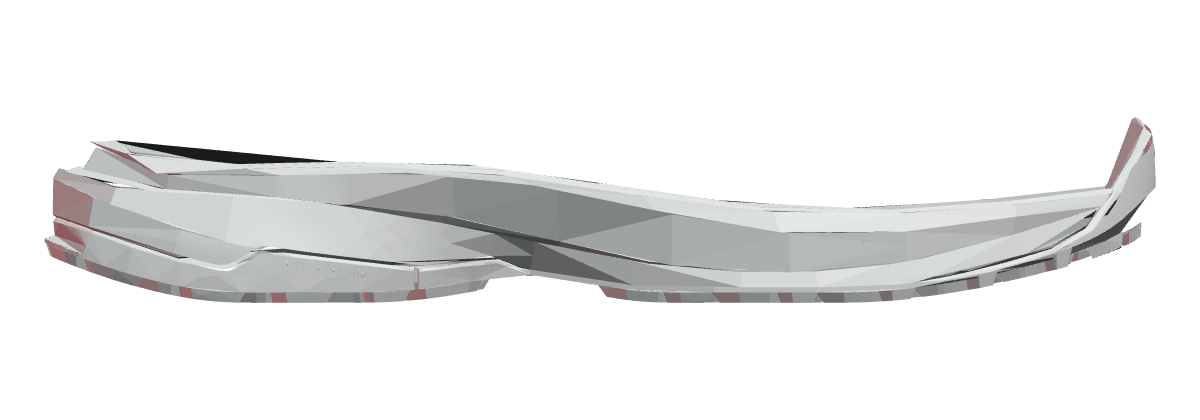
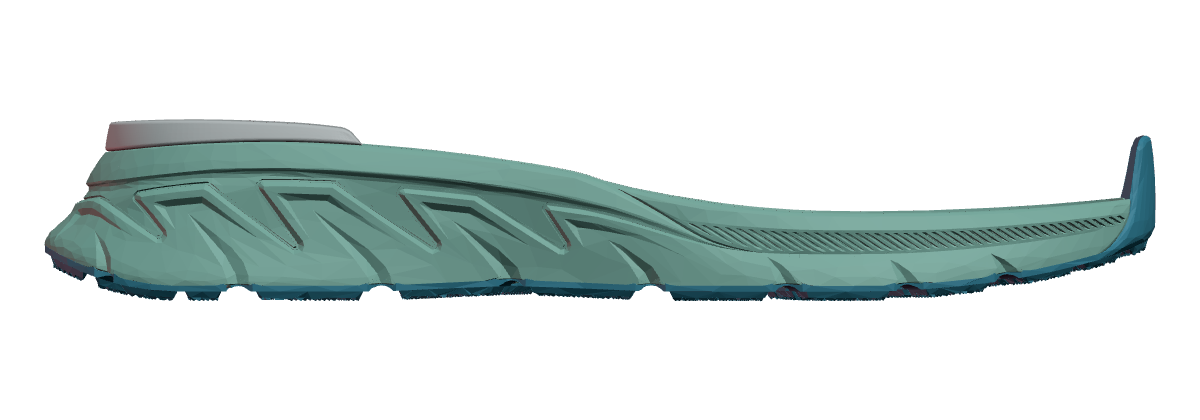
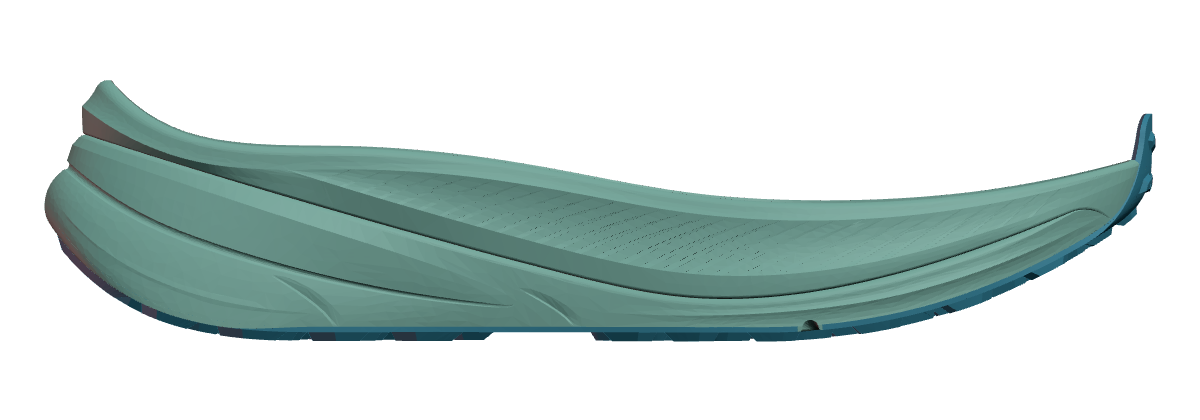
What EVA outsole compounds are
Outsole EVA is the same ethylene vinyl acetate foam used in midsoles, made denser and tougher for ground contact. Common approaches are:
- High-density EVA — less foaming and higher hardness for a tougher surface.
- Rubberized EVA — EVA blended with rubber or other elastomers to improve grip and wear while keeping low weight.
- One-piece EVA — a single injected part that serves as both midsole and outsole, common in sandals, clogs and slides.
How EVA outsoles are made
EVA outsoles are made by the same routes as EVA midsoles: injection molding for one-piece soles and high volumes, or compression molding for finer detail. The compound is adjusted with more polymer and less blowing agent, and often with rubber in the blend.
Tread is molded directly into the part, so no separate outsole layer or bonding step is needed.
Grip: 4 / 8, Medium
EVA gives fair traction on dry surfaces, especially with a well-designed tread. On wet, smooth floors it can be slippery, because the foam surface is harder and less compliant than soft rubber. Rubberized EVA compounds improve grip noticeably and are worth specifying for any EVA sole that sees wet conditions.
Flex: 8 / 8, Max
EVA bends easily and adds almost no stiffness or weight. A one-piece EVA sole can be extremely light and flexible, which is a large part of its appeal in sandals, slides and lightweight trainers.
Abrasion: 2 / 8, Low
Abrasion is EVA's main weakness as an outsole. The foamed structure wears through quickly on asphalt and concrete, with much higher volume loss in ISO 4649 testing than any rubber. Denser grades and rubber blends help, but for any shoe that will see real mileage, exposed EVA should be limited to low-wear zones, with rubber pods at the heel and forefoot.
Where EVA outsoles are used
- Sandals, slides and clogs — one-piece injected EVA soles.
- Lightweight running and training shoes — exposed EVA in low-wear zones, with rubber pods in the heel and forefoot.
- Casual and lifestyle footwear — light, cushioned soles for everyday walking.
- Beach, pool and recovery footwear — waterproof, quick-drying and comfortable.
Designing with EVA outsoles
Use EVA on the ground when weight and flexibility lead the brief and wear is light. Add rubber wherever the shoe will see mileage or wet floors.
- Map the wear pattern and place rubber pods at the heel strike and toe-off points.
- Specify rubberized or high-density EVA rather than midsole-grade foam for ground contact.
- Use deeper tread to make up for lower wet grip.
- Leave extra thickness in exposed EVA zones to allow for wear.