Most midsole research is done on runners in a warm lab. Many shoes are worn somewhere else: on icy pavements in a Nordic winter, or on a concrete floor for an eight-hour shift. Both put different demands on the foam.
Cold makes foam stiff
Foams are polymers, and polymers stiffen as they cool. How much depends on the chemistry.
The independent test lab RunRepeat put shoes in a freezer at about −18 °C for 20 minutes and measured how much stiffer they became to bend. The EVA shoes stiffened the most: the Salomon Sense Ride 4 by 96.6%, the On Cloudswift by 74.1% and the HOKA Clifton 8 by 41.2%. The PEBA-based Nike Invincible Run stiffened by 28.1%, and the TPU-based Saucony Triumph 19 by only 10.3% (RunRepeat).
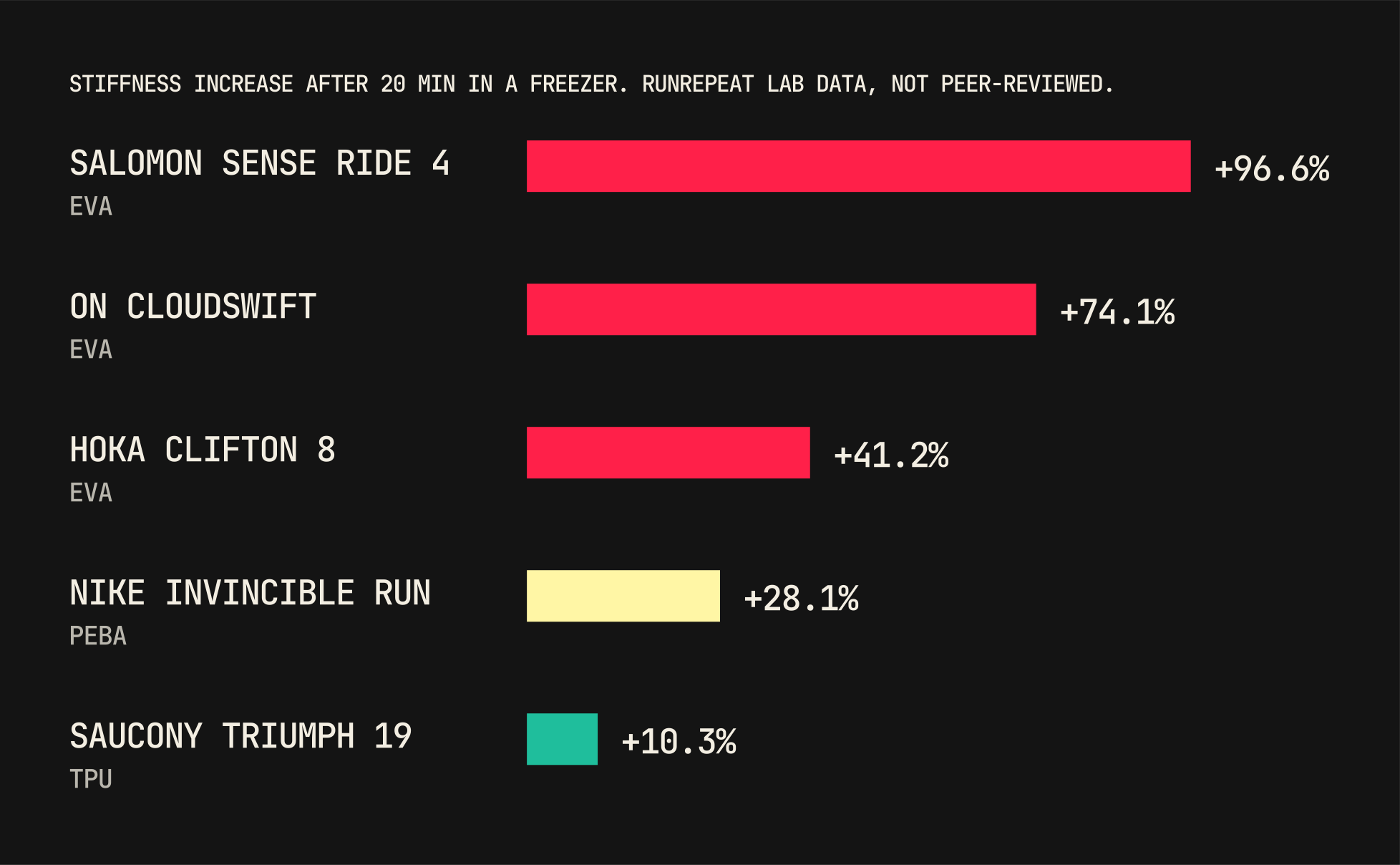
This is industry data, not a peer-reviewed study, and it measures the whole shoe rather than the foam alone. The pattern is still consistent with polymer science and with what runners feel: standard EVA goes hard in the cold, while TPU, PEBA and similar foams keep more of their feel.
Material suppliers make the same point. BASF says its E-TPU foam, Infinergy, stays elastic and soft over a wide temperature range (BASF). That is a supplier claim, so we test it ourselves rather than take it as given.
Long shifts need a different brief
Standing and walking at work is a different job from running. Loads are lower, but they last for hours.
A 2018 systematic review of 10 studies found moderate evidence that cushioned materials, such as softer flooring and cushioned insoles, reduce discomfort and fatigue in workers who stand for long periods. It found only limited evidence that insoles work better than anti-fatigue mats (Speed, Harris & Keegel, 2018).
We found no good evidence that high energy return helps people who walk and stand at work. The benefits of super-foams have been shown in running, at running speeds. For workwear, the priorities are comfort over hours, stable footing, and a foam that keeps its thickness and feel day after day.
What we take from it
- Test cold performance. Measure stiffness at −10 to −20 °C for any shoe sold for Nordic winters.
- Choose foam families that stay soft in the cold, such as TPU or PEBA, or blend EVA for low temperatures.
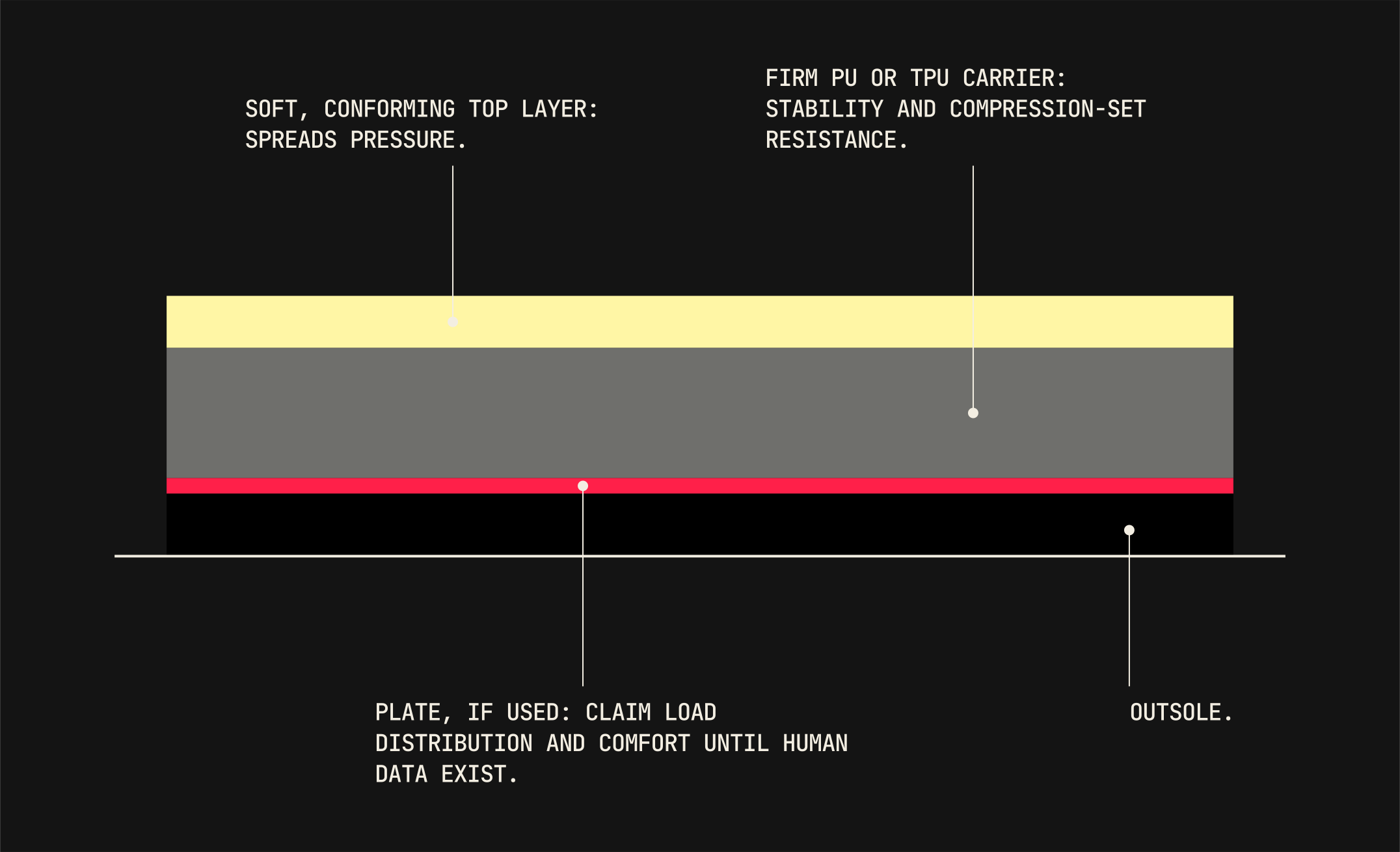
- Build workwear soles in layers: a soft, conforming top layer to spread pressure, a firm and durable carrier for stability, and a tough outsole.
- Don't sell energy return to workers until there is evidence that it matters for walking and standing.
ALCMY Systems engineers midsoles and outsoles from the research up. Talk to us about your next sole.