If you still specify safety footwear as SRC, you are using marks the current standard no longer contains. EN ISO 20345:2022 rebuilt the slip requirements, and the change is simpler than it looks.
What changed
The 2011 edition had three marks: SRA (ceramic tile with detergent), SRB (steel with glycerol) and SRC (both).
The 2022 edition has one basic requirement that every shoe must meet, and one optional mark. The basic requirement is tested on ceramic tile with sodium lauryl sulphate, a detergent: the heel must reach a friction coefficient of 0.31 and the forepart 0.36. The optional SR mark adds a test on ceramic tile with glycerine, with minimums of 0.19 for the heel and 0.22 for the forepart.
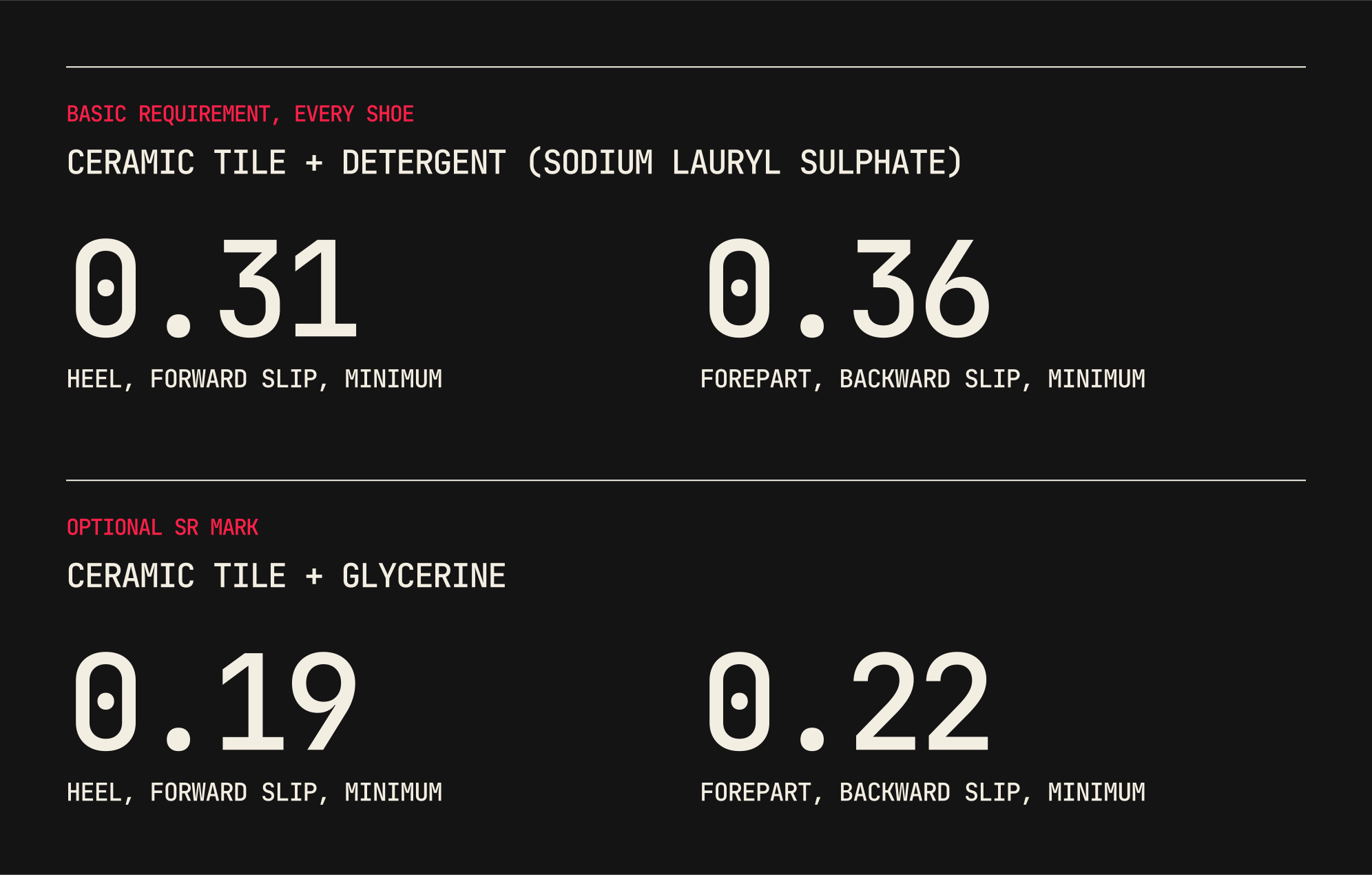
The steel floor is gone. A shoe that passes only the basic requirement carries no slip mark at all; SR means it also passed the harder glycerine test.
Did the bar go up?
Not on detergent. The old SRA heel threshold was 0.28, and 0.31 looks stricter, but the method changed: a 0.03 correction is no longer applied to the result. The two figures describe the same performance.
How the test works
The method is EN ISO 13287. A machine presses the shoe onto the contaminated tile and slides it, once on the heel at a seven-degree angle and once on the forepart. The result is a coefficient of friction.
What the numbers do not tell you
- They describe a new shoe. Wet grip falls as tread wears, and the standard tests day one.
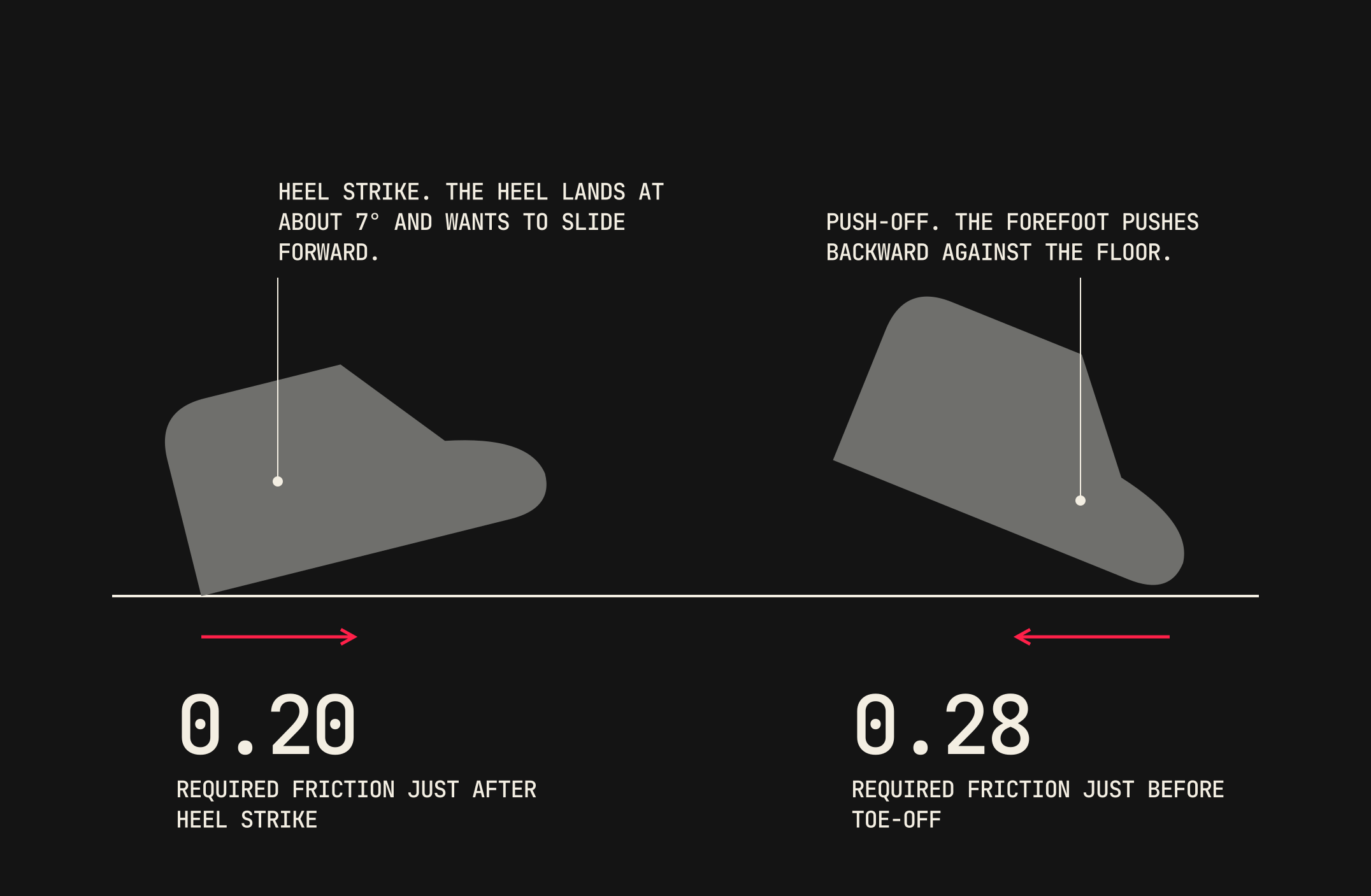
- They are a floor. Walking needs a friction coefficient of about 0.20 at heel strike and 0.28 at push-off on level ground, before any margin for speed, slopes or turning.
- One contaminant is not every contaminant. A pattern that drains detergent well can behave differently on oil.
Also new in 2022
- LG, ladder grip. An optional mark with geometry requirements for the waist and heel breast.
- FO, fuel oil resistance. Now optional instead of built into the basic classes.
What we take from it
Passing is the entry ticket. We design to the mechanism behind the test, drainage in the heel and edges in the forepart, and we ask how the sole performs worn, not only new.
This is a summary, not a substitute for the standard. Check the current text of EN ISO 20345 before specifying or certifying.
ALCMY Systems engineers outsoles from the research up. Talk to us about your next sole.